
How to Manage Stress: 10 Practical Ways to Improve Mental Health
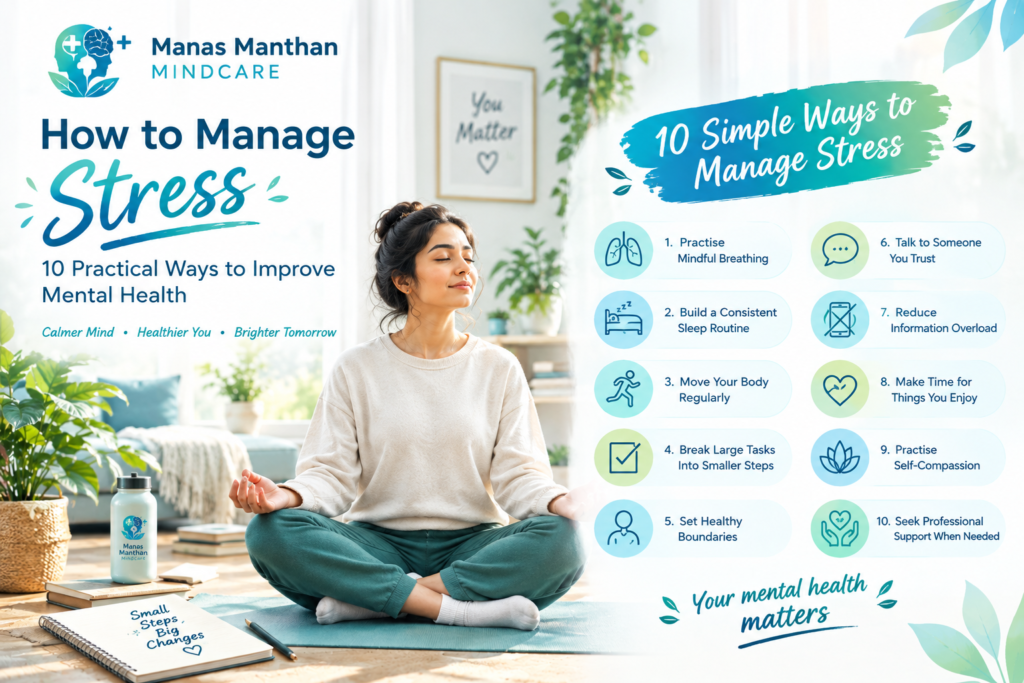
Stress is a normal part of life. Work pressure, studies, financial responsibilities, family expectations, and uncertainty about the future can sometimes feel overwhelming. While occasional stress is common, ongoing stress can affect sleep, concentration, relationships, and emotional wellbeing. The good news is that small, consistent changes can help you manage stress more effectively. In this guide, we explore 10 practical stress management techniques that can support your mental health, help you build healthier routines, and make everyday challenges feel more manageable. What Is Stress and How Does It Affect Mental Health? Stress is the body’s response to a challenging or demanding situation. In small amounts, it can help you stay alert and respond to problems. However, frequent or prolonged stress may leave you feeling exhausted, worried, irritable, or unable to concentrate. Common signs of stress include: These signs can have different causes and do not automatically indicate a mental health condition. If they persist or interfere with everyday life, consider speaking with a qualified mental health professional. 10 Practical Stress Management Techniques 1. Practise Slow, Mindful Breathing When you feel overwhelmed, pause and bring your attention to your breathing. Breathe gently through your nose and allow your exhale to be slow and comfortable. Try this for one or two minutes without forcing deep breaths. If you feel dizzy or uncomfortable, return to normal breathing. Mindful breathing can provide a useful pause during stressful moments and help you reconnect with the present. 2. Build a Consistent Sleep Routine Sleep and mental wellbeing are closely connected. Poor sleep can make everyday challenges feel harder to manage, while stress can also disrupt sleep. To support healthier sleep habits: You do not need a perfect routine. Start with one realistic change and build from there. 3. Move Your Body Regularly Physical activity can support mood, sleep, and general wellbeing. You do not need an intense workout to get started. Consider walking outdoors, stretching between work sessions, dancing to music, cycling, or doing another activity you enjoy. Begin with a manageable amount of movement and increase it according to your comfort and abilities. 4. Break Large Tasks Into Smaller Steps A long to-do list can make you feel as though everything needs to be completed immediately. Instead, choose one priority and break it into smaller actions. For example, rather than writing “complete my entire project,” start with “spend 15 minutes outlining the first section.” Completing smaller steps can make responsibilities feel more manageable and help you recognise your progress. 5. Set Healthy Boundaries Saying yes to every request can leave you with little time or energy for yourself. Healthy boundaries may include limiting after-hours work, asking for more time when your schedule is full, or communicating when you need a break. You can be considerate of other people while still recognising your own needs. 6. Talk to Someone You Trust You do not have to handle every difficult feeling alone. Talking with a trusted friend, family member, or supportive person may help you organise your thoughts and feel less isolated. You can begin with a simple sentence: “I’ve been feeling overwhelmed lately, and I’d like someone to listen.” You do not always need immediate solutions. Sometimes, having a safe and non-judgmental conversation is a helpful first step. 7. Reduce Information Overload Constant notifications, social media comparisons, news updates, and messages can make it difficult to mentally switch off. Try setting specific times to check your phone, turning off unnecessary notifications, or taking short breaks from social media. Pay attention to how different online activities affect your mood. The goal is not to avoid technology completely, but to create a healthier relationship with it. 8. Make Time for Activities You Enjoy When responsibilities increase, enjoyable activities are often the first things people remove from their schedules. Make room for activities that help you feel connected to yourself, such as reading, listening to music, gardening, drawing, cooking, or spending time with people you care about. Rest and recreation are not rewards that you must earn after completing everything. They are important parts of a balanced routine. 9. Practise Self-Compassion Stress can make people critical of themselves. You may feel that you should be doing more, handling everything better, or never making mistakes. Try replacing harsh self-talk with a more balanced response. Instead of saying, “I can’t handle anything,” try, “I’m dealing with several challenges, and I can take them one step at a time.” Self-compassion does not mean ignoring responsibilities. It means responding to difficulties without adding unnecessary self-criticism. 10. Seek Professional Support When Needed Self-care strategies can be helpful, but they are not always enough on their own. Consider speaking with a qualified mental health professional if stress, anxiety, low mood, or sleep difficulties persist, become difficult to manage, or interfere with your relationships, studies, work, or daily activities. A professional can help you understand your concerns and explore appropriate support options. Seeking help is a constructive step, not a sign of weakness. How to Create a Simple Daily Stress Management Routine You do not need to change your entire lifestyle overnight. Start with a routine that fits your current circumstances. Morning: Take a few quiet moments, have breakfast if possible, and identify one or two priorities for the day. During the day: Take short breaks, move your body, and pause to check how you are feeling. Evening: Reduce unnecessary screen time, spend a little time on an enjoyable activity, and prepare for sleep. When stress builds up: Pause, breathe comfortably, identify the immediate problem, and decide on one manageable next step. Consistency matters more than perfection. Adjust your routine as your needs change. When Is Stress More Than Everyday Pressure? Everyday stress often changes with circumstances. However, ongoing distress that affects sleep, appetite, concentration, relationships, or your ability to complete daily activities deserves attention. Consider seeking professional support if: You do not need to wait until things become unbearable before asking for help. If you are in immediate danger or experiencing a mental health